

EU Packaging Law Is Now Live: What Paper Cup, Bowl and Lid Buyers Must Fix in Q4 2026
On 12 August 2026 the EU’s Packaging and Packaging Waste Regulation (PPWR) started to apply across all 27 member states. Only part of it bites today — but that part lands squarely on foodservice disposables: strict limits on PFAS in food-contact packaging. For importers of paper cups, paper bowls and lids, this is the first quarter in which the coating chemistry, the lid material and the technical file all have to line up.
The news in short
- 12 August 2026: the PPWR applies across the EU. Food-contact packaging containing PFAS above the new limits can no longer be placed on the market.
- 2028: one harmonised EU labelling system for packaging, replacing today’s patchwork of national sorting logos.
- 2030: recyclability-by-design requirements, recycled-plastic-content targets, restrictions on certain single-use plastic formats and reuse targets take effect.
- Q4 2026: Italy moves towards compostable-only single-use plastic, while the European Commission missed its first harmonisation deadline for packaging labels — so national differences persist.
- May 2026: paper cup recycling access reached 20% of the US population, according to the Foodservice Packaging Institute.
- February 2026: US authorities imposed duties on moulded fibre products from China and Vietnam, changing the landed-cost maths for fibre tableware.
The news in one paragraph
Regulation (EU) 2025/40 entered into force in February 2025 and its rules now apply in phases, starting on 12 August 2026. The first wave is deliberately narrow: it restricts PFAS in food-contact packaging, the “forever chemicals” historically used to make takeaway containers, wrappers and cups grease- and water-resistant. Everything else arrives on a schedule — harmonised labelling in 2028, then recyclability, recycled plastic content, reuse targets and limits on certain single-use plastic formats from 2030. Read on its own, that timeline looks comfortable. Read alongside what is happening in Italy, in US recycling systems and in US trade policy, it looks like the opening quarter of a decade-long shift in how foodservice packaging is bought.
Why paper cups, bowls and lids sit in the crosshairs
1. The coating question is not the same as the plastic question
The most common misunderstanding we hear from buyers is that the PFAS restriction bans polyethylene-lined cups. It does not. PFAS and polyethylene are different substances with different regulatory treatment. What the new limits target is a family of fluorinated compounds; a cup lined with conventional LDPE is not automatically caught by them, but a cup whose grease barrier relies on a fluorochemical additive can be.
The practical consequence is that barrier chemistry has become a purchasing decision rather than a technical footnote. Water-based barrier coatings — applied instead of, or in some constructions alongside, a plastic film — are PFAS-free and, importantly for recyclers, repulpable: the fibre can go back into the paper stream instead of the residual waste bin. That repulpability story is what makes paper cups defensible in a market where “all packaging must be recyclable” becomes a design requirement in 2030.
2. The lid is plastic packaging — treat it that way
A hot cup body is fibre. The lid screwed or pressed onto it is usually polystyrene, polypropylene or CPLA. Under a regime that sets recycled-content targets for plastic packaging and demands recyclability by design, the plastic component is where a paper cup programme is most exposed. This is one reason fibre and die-cut lid formats keep gaining share: a market study published on 7 October 2026 projects the global die-cut lids market reaching USD 1.62 billion by 2036, driven precisely by lightweight, sustainable formats.
| Barrier / lid option | PFAS risk | Repulpable or recyclable story | Where it fits | Watch-outs |
|---|---|---|---|---|
| Conventional PE coating | None from the liner itself | Weak — film must be separated from fibre | Value hot cups, high-volume QSR | Increasingly questioned by EU recyclers and city collection systems |
| Water-based barrier coating | PFAS-free by formulation | Strong — designed for repulping with the fibre | Retail coffee chains, supermarkets, EU tenders | Heat and sealing window is narrower; qualified suppliers matter |
| PLA / compostable film | PFAS-free by formulation | Good in industrial composting streams | Events, Italy and markets with compostable mandates | Heat resistance limits hot applications; verify certification scope |
| Fibre or die-cut lid | PFAS-free by formulation | Strong — keeps the whole pack mono-material | Cold drinks, bowls, premium and eco-positioned ranges | Requires tooling and a leak-performance check for hot liquids |
| PS / PP lid | Not a PFAS issue | Depends on the polymer and local collection | Cold cups, cost-led programmes | Recycled-content and design rules apply to the plastic part |
3. Moulded fibre bowls and trays are riding the same wave
Bagasse and moulded fibre tableware — the bowl, clamshell and plate side of the business — is benefiting directly from the PFAS restrictions. Suppliers in this segment reported rising global demand for PFAS-free bagasse formats in October 2026, with buyers moving as the new packaging rules take hold. For importers building a single, defensible range, a fibre bowl next to a fibre-lidded cup is a simpler story to explain to a supermarket buyer than a mixed collection of materials.
The compliance timeline, in plain terms
PFAS limits in food-contact packaging take effect. Food-contact packaging above the thresholds cannot be placed on the EU market.
Commission guidance, delegated acts, reuse obligations for foodservice and the first reporting duties phase in. Expect national EPR registration duties to keep tightening.
A harmonised packaging labelling system replaces fragmented national sorting labels, so one SKU can be sold across markets without re-labelling.
All packaging must be recyclable by design; recycled plastic content targets apply to plastic packaging; certain single-use plastic formats are restricted; reuse targets begin.
Reuse and recycled-content thresholds rise again, which favours products designed on recyclable, mono-material lines today.
What a compliance-ready cup actually looks like

Seven questions to put to your supplier this quarter
- Can you provide PFAS test reports from an accredited laboratory, covering total organic fluorine as well as the targeted PFAS list? Ask for a recent report, not the one from three seasons ago.
- Which barrier system do you run — PE, water-based, PLA — and can you document repulpability or recyclability for the fibre body?
- What is in the food-contact compliance file: declaration of conformity, migration test reports, food-contact statement and board grade?
- Is the paperboard FSC or PEFC chain-of-custody traced, and can you supply the certificate codes and validity dates?
- For lids: what polymer, what recycled content, and is there a fibre or mono-material alternative for this range?
- Are inks low-migration and mineral-oil-free, and has the print been assessed for food contact in nested, stacked formats?
- Traceability: batch codes, manufacturing location documentation, and how fast can you issue technical documents when an importer needs them for EPR registration or a market-surveillance query?
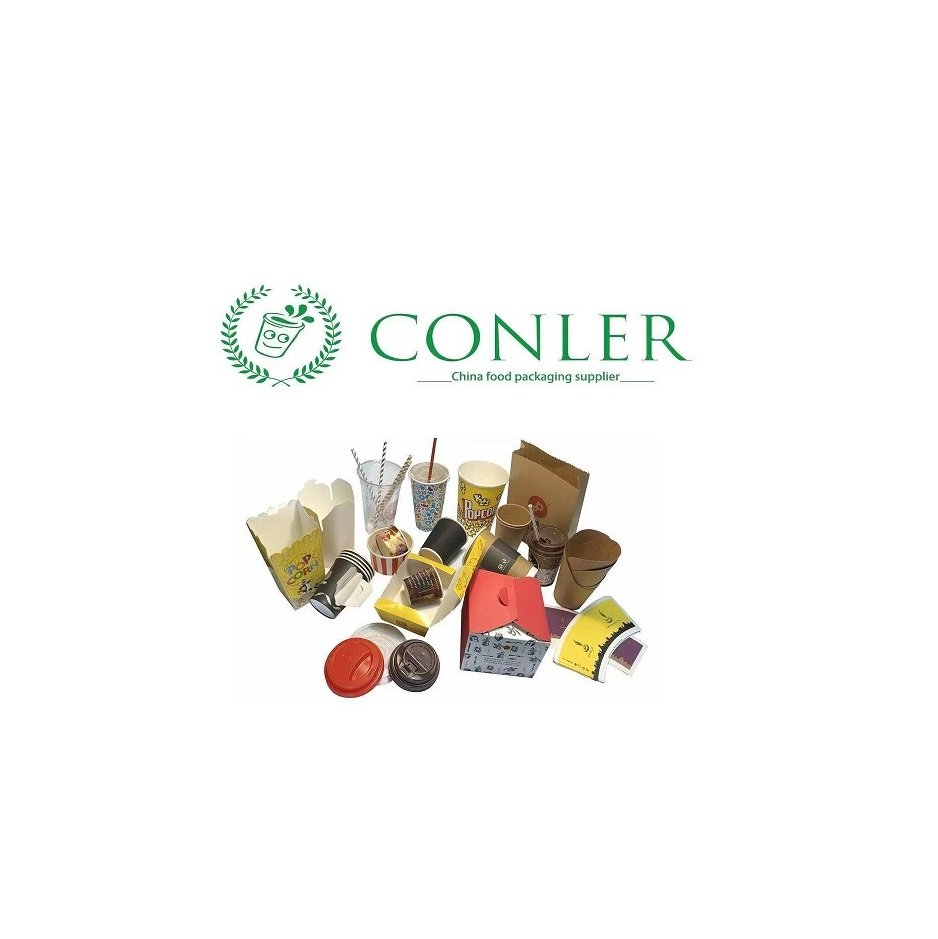
What is changing on the factory floor
From the production side in Anhui, three changes are visible in 2026 enquiries. Buyers are asking for barrier chemistry first and price second, which was not the order of conversation three years ago. They are asking for documents — declarations of conformity, migration reports, PFAS test results — as a condition of sampling rather than after a trial order. And they are asking whether one lid platform can serve several cup sizes, because fewer SKUs means fewer compliance files to maintain.
The manufacturing response is unglamorous but real: water-based coating lines qualified for hot and cold applications, board sourced against chain-of-custody certificates, mineral-oil-free ink systems, and testing budgets that used to sit under “quality” now sitting under “market access”. Factories that treated compliance as paperwork are discovering it is a production capability instead.
Market signals worth watching this quarter
- Die-cut and fibre lids: a market study published on 7 October 2026 projects the die-cut lid market reaching USD 1.62 billion by 2036 on the back of lightweight, sustainable formats.
- PFAS-free bagasse tableware: suppliers reported rising global demand in early October 2026 as the new packaging rules took effect — bowls and clamshells are moving as fast as cups.
- US paper cup recycling: the Foodservice Packaging Institute reported in May 2026 that collection access for paper cups now covers 20% of the US population, a reminder that the fibre story is being rebuilt in North America as well as Europe.
- US trade policy: duties on moulded fibre products from China and Vietnam, imposed in February 2026, mean landed-cost planning needs to be updated alongside compliance planning.
- Italy: Decreto-Legge n. 143 pushes single-use plastic towards compostable-only formats, showing how quickly a national rule can move ahead of the EU baseline.
The risk buyers are underpricing
Enforcement across the EU is uneven. The Commission missed its first deadline to harmonise packaging labelling, and in August 2026 it signalled to member states that penalties should be applied pragmatically while guidance catches up. It is tempting to read that as a licence to wait.
That reading is expensive. Responsibility for placing compliant packaging on the market sits with the economic operator — in most supply chains, the importer — not with the factory that made the cup. A delayed rule does not remove the exposure; it simply moves the moment at which it surfaces, usually during a supermarket audit, a customs query or a tender questionnaire, and usually on a deadline measured in days.
The suppliers who are winning EU and US tenders in the second half of 2026 are not the ones with the lowest quotation. They are the ones who can hand over a complete technical file within 48 hours of being asked.
About Conler Papers
Huaining Shengshi Kangle Paper and Plastic Co., Ltd. manufactures paper cups, paper bowls, soup containers and matching lids from our base in Anqing, Anhui Province, China. We supply importers, distributors and foodservice chains in Europe, North America, Australia and the Middle East.
- Water-based and PFAS-free barrier options alongside conventional coatings
- Fibre, CPLA and plastic lid platforms across sizes and formats
- Custom printing, private label and retail-ready packaging
- Technical documentation and test reports for buyer compliance files
Tell us the market and the format, and we will send samples with the paperwork attached.
Sources and further reading
- European Commission, DG Environment, New EU packaging rules start to apply, including restrictions on PFAS in food-contact packaging, 11 August 2026.
- Norton Rose Fulbright, PPWR comes into effect: New rules on packaging enter into application as of 12 August 2026, August 2026.
- Lexology, Goodbye plastic: incoming packaging and recycling regulations (Q4 2026), 5 October 2026.
- Il Sole 24 ORE, Plastic packaging: sale permitted only if it is biodegradable and compostable (Italy, Decreto-Legge n. 143), 8 October 2026.
- Waste Dive / Recycling Today, 20% of US residents can now recycle paper cups, FPI says, May 2026.
- Packaging Dive, Commerce hits China, Vietnam with duties for molded fiber products, February 2026.
- openPR, Die-Cut Lids Market to Hit USD 1,620.0 Mn by 2036, 7 October 2026.
- The Tribune, Ecodelicious Pulp sees rising global demand for PFAS-free bagasse tableware as packaging rules take effect, 6 October 2026.
- Packaging Insights, EU packaging rules impact 93% of UK manufacturers and suppliers, survey finds, 27 August 2026.
Frequently asked questions
Are PE-coated paper cups banned in the EU?
No. The PPWR restricts PFAS in food-contact packaging; it does not ban polyethylene linings. That said, the requirement for all packaging to be recyclable by design from 2030 puts pressure on linings that recyclers cannot separate from fibre, which is pushing retail and foodservice buyers towards water-based, repulpable barrier coatings.
Do lids count as plastic packaging under the new rules?
Yes. A plastic lid is a plastic packaging component, so recycled-content and design-for-recycling obligations apply to it even when the cup body is fibre. Fibre and die-cut alternatives avoid the question entirely, which is one reason that segment is forecast to grow strongly through 2036.
What documents should an importer collect from a Chinese paper cup manufacturer?
At a minimum: a declaration of conformity, food-contact compliance statements, migration test reports, PFAS test reports from an accredited laboratory, board chain-of-custody certificates, and batch-level traceability. Ask for them before sampling, not after the first container ships.
Is it safer to wait until enforcement is clearer?
Waiting shifts risk downstream to the importer rather than removing it. Market surveillance, supermarket audits and tender questionnaires all assume the paperwork exists. Building a compliant range now — and keeping the documents current — is cheaper than retrofitting a programme after a query arrives.


