

The EU’s Anti-Greenwashing Rules Are Now Live: What You Can and Cannot Print on a Paper Cup
On 27 September 2026 the EU’s Empowering Consumers for the Green Transition Directive started to apply across the single market. From that date, words like “eco-friendly”, “biodegradable” and “climate neutral” can no longer be printed on packaging unless the trader can back them up. For paper cups, bowls and lids, the label is the product — which makes this a sourcing issue, not a design one.
The news in short
- 27 September 2026: the ECGT Directive (also called EmpCo) applies. It amends the EU’s Unfair Commercial Practices Directive and Consumer Rights Directive to cover environmental claims.
- Generic claims are out: vague wording such as “environmentally friendly” or “eco” is prohibited unless the product’s excellent environmental performance can be demonstrated.
- Offset-based neutrality claims are banned outright: a product cannot be marketed as carbon or climate neutral purely because emissions were offset.
- Labels need a scheme: sustainability labels are only allowed if they rest on an official certification scheme or are established by a public authority.
- Existing stock counts: the rules cover claims on products already on the market, so artwork approved last year may need to come off the shelf.
- Enforcement is uneven: the transposition deadline was 27 March 2026, and the Commission opened infringement procedures against 20 member states on 28 May 2026.
- The bigger Green Claims Directive is paused: the separate proposal on substantiating environmental claims was withdrawn, so the ECGT is the framework that applies today.
The news in one paragraph
The ECGT is a consumer protection law, not an environmental one. It does not ban paper cups, coatings or any particular material. What it bans is unsupported language. The European Commission’s own research, cited when the rules were proposed, found that more than half of green claims in the EU were vague or misleading and that 40% were entirely unsubstantiated. The directive answers that with a straightforward rule: a claim about environmental performance has to be specific, verifiable, and backed by evidence that exists before the claim is printed. Enforcement runs through national consumer authorities, but also through competitor complaints and collective actions — which in practice means a rival brand can act faster than a regulator.
Why this lands on paper cups harder than on most products
Three things make disposable foodservice packaging unusually exposed.
The category sells on environmental language. Very few product classes lean as heavily on words like “eco”, “green”, “plastic-free” and “compostable”. Buyers ask for these words because their own customers ask for them, and suppliers print them because a print plate is cheap to change and easy to forget.
The cup is the label. A claim printed on a cup travels through the consumer’s hands, into a photograph, and onto social media. There is no box to redesign quietly. Whatever is printed on the product is the advertisement.
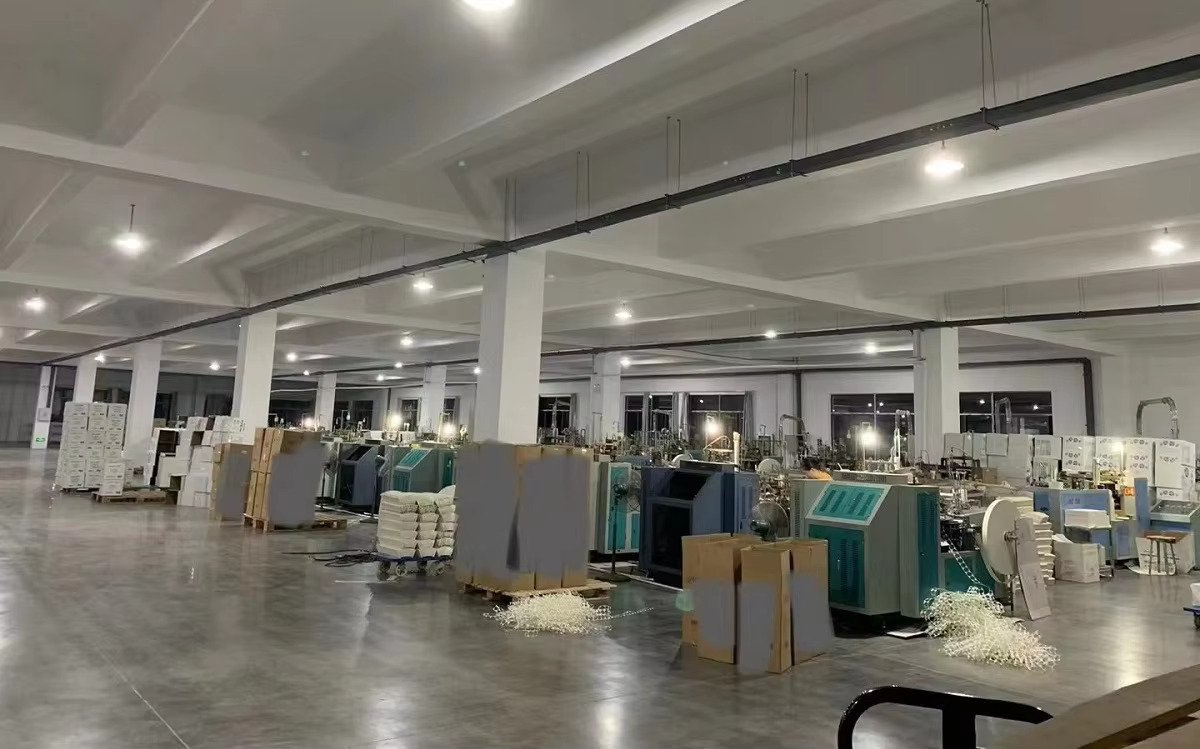
The claim crosses borders with the shipment. Printing in Anqing or Huaining does not remove the brand’s exposure in Rotterdam or Milan. The artwork file is now a compliance document, and the factory that produces it sits inside the evidence chain whether it wants to or not.
What changed, claim by claim
The table below is the practical version of the directive for anyone buying or specifying disposable tableware. It is a starting point for a legal review, not a substitute for one.
| What is printed on the cup | Status since 27 September 2026 | Why | What holds up better |
|---|---|---|---|
| “Eco-friendly”, “Green”, “Sustainable” | Prohibited as generic | Vague environmental claims are banned unless excellent environmental performance can be demonstrated for the whole product. | Name the attribute: “Made with FSC®-certified board”. |
| “Biodegradable” on its own | High risk | Biodegradation depends on the material, the environment and the timeframe. Without those, the claim is unverifiable. | “Industrially compostable to EN 13432”, plus the certifying scheme. |
| “Climate neutral”, “CO₂ neutral” | Prohibited | Claims of a neutral, reduced or positive climate impact based only on offsetting schemes are banned. | Report a measured reduction: “X% less board waste per 1,000 cups since 2024”. |
| “Plastic-free” / “100% plastic free” | Needs precision | Accurate for a cup with a water-based barrier coating and a fibre lid; false for a cup with a PE film, a PLA lining or a plastic lid. | “PE-free, water-based barrier coating” and state the lid material. |
| “100% recyclable” | Needs context | Recyclability depends on which collection systems actually accept the format. An absolute claim invites a challenge. | “Designed for fibre recycling where collection exists”. |
| Leaf, globe or “eco” logos | Prohibited unless certified | Sustainability labels must be based on an official certification scheme or set by a public authority — self-made marks do not qualify. | Use the official mark, with the scheme and certificate number printed. |
| “Recycled” / “Made from recycled material” | Workable with evidence | Specific and measurable — provided the percentage and the scope (board? lid? packaging?) are stated. | “Lid contains 30% post-consumer recycled PP”. |
From slogan to file: how a claim becomes defensible
Two details in this chain change the supplier conversation. First, evidence has to exist before the claim is printed, not be assembled during a complaint. Second, responsibility sits with the trader who places the product on the market — in most supply chains the importer or the brand — while the factory holds the certificates, test reports and material declarations. A claim can therefore be perfectly honest and still unenforceable, simply because the paperwork stayed in China.
What to ask for before you approve artwork
- A written list of every environmental claim on the cup, lid, sleeve and outer carton — with the evidence reference for each one, not a general assurance.
- Certificate details for any certification referenced: scheme name, certificate number, scope and expiry date.
- The exact material composition, so that “plastic-free” and “recyclable” statements can be checked against reality rather than intention.
- Test reports behind performance claims — barrier, migration and PFAS reports from an accredited laboratory.
- Clarity on the “where”: which markets accept this format in their collection systems, and which do not.
- Confirmation that no self-designed eco logo appears in the print file, and that official marks are reproduced to the scheme’s rules.
- A versioned print file with a change log, so that when a claim is edited the evidence file is updated at the same time.
What is still unsettled
The wider Green Claims Directive — the proposal that would have required third-party verification for explicit environmental claims — has been withdrawn. That removes a layer of future bureaucracy, but it also means the ECGT is doing the work alone, and it does so through 27 different national legal systems. Transposition was uneven from the start: the deadline was 27 March 2026, and two months later the Commission opened infringement procedures against 20 member states that had not completed the process.
There is also a fair industry criticism: rules written around consumer goods do not always fit a product whose environmental story depends on infrastructure — collection, sorting and industrial composting — that the brand does not control. That argument will shape how regulators interpret “verifiable” in practice. It does not change the wording on your cups today.
While you fix artwork, plan Q4 lead times
October is a double-constraint month for anyone sourcing from China. Factories restarted after the National Day break in early October, so the next few weeks set delivery dates for Q1. On the ocean side, analysts reported in the second week of October that post-peak spot rates on transpacific lanes were falling while carriers signalled planned increases, and Sea-Intelligence warned that Asian port congestion could persist into mid-2027. The practical read for buyers: book capacity early, and treat an artwork change as a schedule item with its own lead time — approving a revised print file the week before a booking is the fastest way to miss a launch.
About Conler Papers
Huaining Shengshi Kangle Paper and Plastic Co., Ltd. manufactures paper cups, paper bowls, soup containers and matching lids from our base in Anqing, Anhui Province, China, supplying importers, distributors and foodservice chains in Europe, North America, Australia and the Middle East.
- Water-based, PFAS-free barrier options alongside conventional coatings
- Fibre, CPLA and plastic lid platforms across sizes and formats
- Material composition statements and certificate details supplied with quotations
- Print files prepared so that every claim on the cup can be traced to a document
Send us your artwork and your target market, and we will tell you which claims we can support — and which ones we would change before you print.
Frequently asked questions
Does this apply if I am not based in the EU?
The ECGT governs claims made to consumers in the EU, so it applies to any product placed on the EU market — including goods manufactured in China and sold into Europe by a European importer or through online channels. Brands outside the EU that copy the same artwork into other markets mostly do so voluntarily, but a growing number standardise on the stricter wording to avoid managing two print files.
Can I still print “compostable” on a paper cup?
Yes, if it is specific and supported: name the standard, such as EN 13432 for industrial composting, identify the certifying scheme, and make clear which part of the product the claim covers. An unqualified “compostable” printed across a cup with a plastic lid is exactly the kind of claim the directive targets.
Who is liable — the factory in China or the importer?
Enforcement runs against the trader responsible for the claim, which is normally the brand or importer placing the product on the EU market. The manufacturer’s role is evidential: certificates, composition statements and test reports. That is why buyers are now asking for those documents before approving artwork rather than after a complaint.
Is “recyclable” safe to use?
Only with context. Recyclability depends on whether collection and sorting systems actually accept the format in the relevant market. Wording such as “designed for fibre recycling where collection exists” is defensible; an unqualified “100% recyclable” is not.
Sources and further reading
- ESG Today, New EU Anti-Greenwashing Rules Enter into Force, 28 September 2026.
- Latham & Watkins, EU Empowering Consumers Directive: New Rules on Green Claims Apply From 27 September 2026, 9 September 2026.
- JD Supra, New EU Green Claims Rules Are Now Live: What Brands Must Do About Old Stock, 29 September 2026.
- Packaging Europe, Everything you need to know about the EU’s upcoming environmental claim law, 14 August 2026.
- Packaging Europe, The problem with Europe’s greenwashing laws, 29 April 2026.
- PwC, Greenwashing, the European crackdown: from 27 September, generic claims and non-certified labels are banned, 25 August 2026.
- The Loadstar, Post-peak spot rates tumble as ocean carriers eye price increases, 9 October 2026.
- WorldCargo News / Sea-Intelligence, Asian port congestion could persist into mid-2027, 6 October 2026.


